
 Join the Exeter Memories
 Bear Street
Page updated 15th June 2018
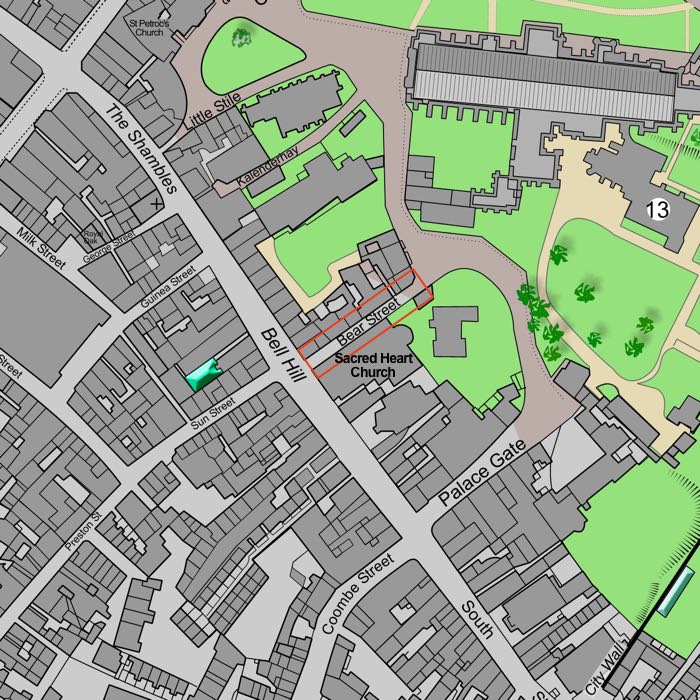 Linking
Cathedral Close and South Street, this
narrow street (56m long) took its name from the Bear
Inn which was the town house of
the Abbots of Tavistock. Near the end of the street was placed the Bear Gate, one of seven gates around Cathedral Yard. In 1286, the town
house of the Abbots was named Bere. The Abbots of Tavistock ran one of the richest abbeys in Devon from the tin, lead and silver mines at Bere Alston. The Abbot of
Tavistock was charged by Edward I to
administer the silver mines that were situated there.
Linking
Cathedral Close and South Street, this
narrow street (56m long) took its name from the Bear
Inn which was the town house of
the Abbots of Tavistock. Near the end of the street was placed the Bear Gate, one of seven gates around Cathedral Yard. In 1286, the town
house of the Abbots was named Bere. The Abbots of Tavistock ran one of the richest abbeys in Devon from the tin, lead and silver mines at Bere Alston. The Abbot of
Tavistock was charged by Edward I to
administer the silver mines that were situated there.
The sign of the inn was a bear with the word Bere, and hence a pun. They seemed to like puns in those days. The Inn remained after the monasteries were dissolved by Henry VIII and was a centre for merchants to trade. Russell's carrier service was based at the site of the Bear Inn from before 1800, with heavily laden horse-drawn wagons bound for London departing at dawn, every day of the week. There was a second Bear Inn situated further up South Street from about 1820 to 1871.
Fragments of a drain installed by the Romans for their Bath House in Cathedral Yard were excavated in the street, indicating the street was within the Roman fortress.
Bear Street was very close to the public water conduit situated at the front of the College of the Vicars Choral; the ancient underground passages from St Sidwell's fed the conduit with pure water. When the cholera outbreak of 1832 broke out, many from the other side of South Street, in the Westquarter were infected from water dipped from the leats. Bear Street, although very short, only suffered two deaths from the disease, a result of their clean water supply.
Celebration of a wedding
On the marriage of the Prince of Wales in March 1863, the street erected celebratory decorations "Bear-street had a fine bold arch of evergreens, interspersed with coloured lamps, and surmounted by a fine transparency, with the words- "Albert Edward and Alexandra - Health and happiness," belonging to Mr. Hutchingson."
It was proposed the the street be widened from the top at Palace Street down to the last house fronting South Street in 1871, although the scheme never happened due to the cost. Then, 1884, it was macadamised and a pavement created on the north side. Apart from the Bear Inn, the only other public house so far traced to Bear Street is the Crown and Anchor which had a change of licensee in 1873.
Sources: Cathedral Archives, British Newspaper Archives. History of Exeter by Alexander Jenkins.
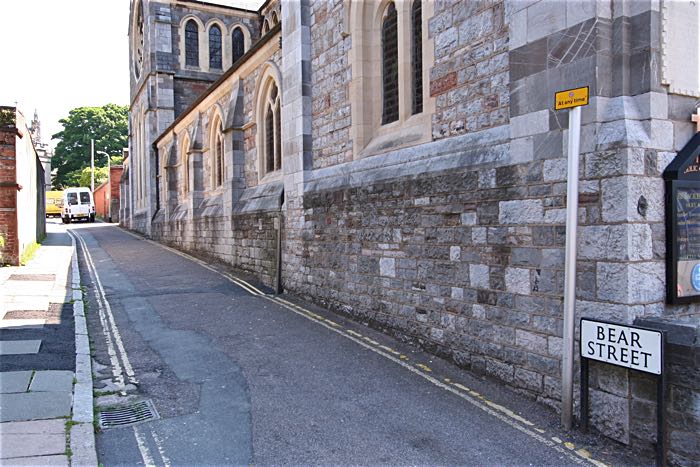
Bear Street with the Sacred Heart Church on the right.
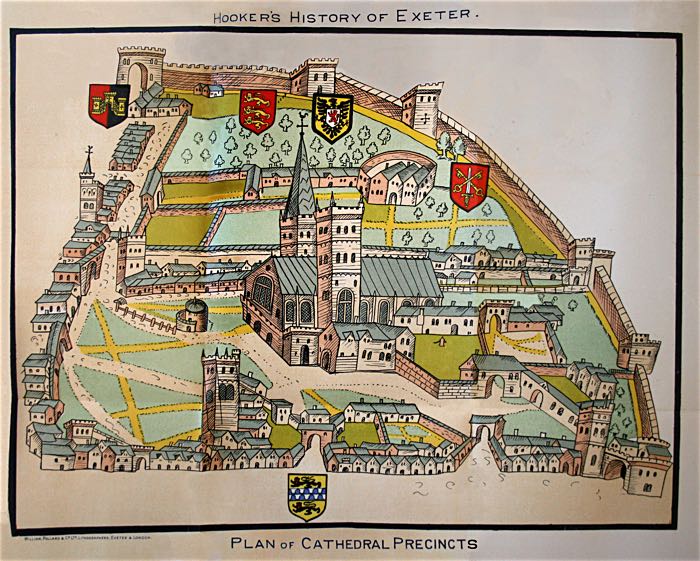
Hookers map of Cathedral Yard. Bear Gate is immediately above the coat of arms at the bottom of the image.
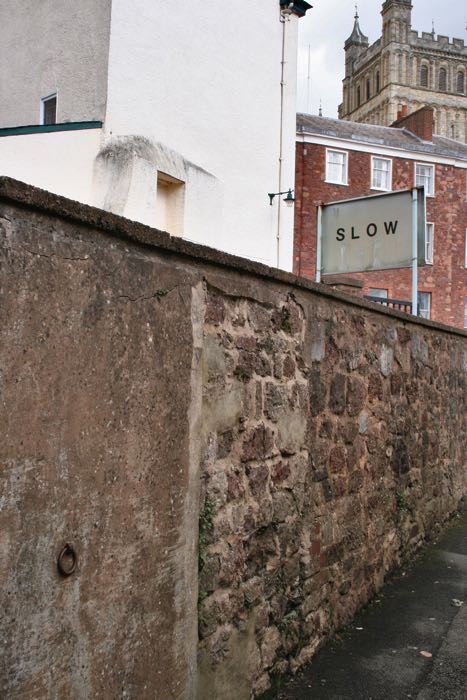
The ring in the wall (left bottom) is the position of the gate.
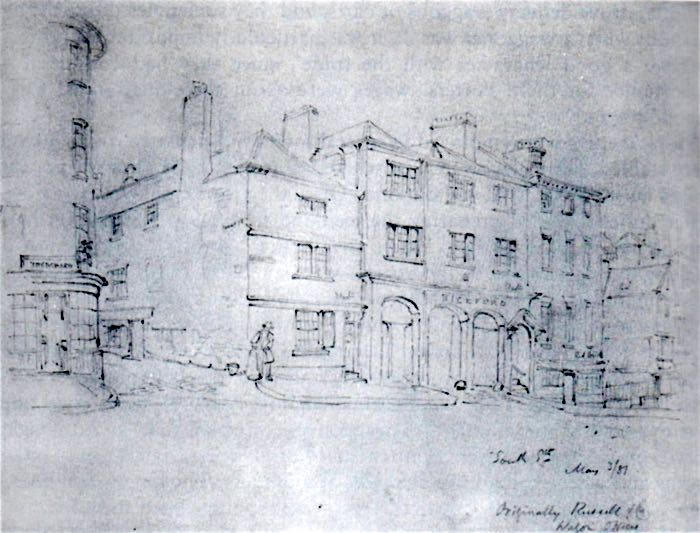
The entrance to Bear Street, with the Bear Inn (Pickfords transport) on the right.

The Bear Tower, centre, before it was demolished.

Arthur Norcombe, wardrobe dealer, outside hias Bear Street shop.
│ Top of Page │